









Why Mid-Drive Folding eBikes Are Still Rare?
Walk into any eBike shop or scroll through any online listing, and you will notice something: folding eBikes are everywhere. But almost all of them use hub motors. Finding a mid-drive folding eBike that genuinely delivers on performance, portability, and price that's a different story entirely.
So why is that? Why do Mid-Drive Folding eBikes remain so uncommon when mid-drive technology is widely praised in the broader eBike world?
The answer comes down to real engineering challenges that most manufacturers simply are not eager to tackle.
Most Folding eBikes Use Hub Motors
A folding ebike with mid-drive motor sounds ideal; you would get powerful hill-climbing performance in a tiny package. In practice, though, almost all folding e-bikes use hub motors. The simple reasons are they're affordable, simple, and easy to mass-produce.
A hub motor sits inside the wheel, usually the rear one. It doesn't interact with the bike's gears at all. It just spins the wheel directly. That makes it much cheaper to build and much easier to integrate into a folding frame, exactly what mass-market folding bikes need.
It also makes them simple to install and maintain: a sealed hub is easy to swap or service, and it doesn’t overload the drivetrain. This approach works well for casual riders. It keeps costs low, reduces the number of parts that can break, and gets products to market fast.
For the mass market, riders who want a light, affordable folding commuter ebike for short city trips, hub motors check all the right boxes.
But riders who want more from their eBike start running into the limits of hub motors pretty quickly. For instance, sluggish assist on hills, a less natural pedaling feel, and weaker torque overall.
That gap is exactly where mid-drive systems shine, and where the engineering gets complicated.
Why Mid-Drive Systems Are Harder to Design in Folding Frames
Mid-drive motors are widely used on full-size eBikes. They sit at the center of the bike and work with the gears, which improves efficiency and ride feel.
But adding one into a folding frame is not that simple, not even close.
Space Limitations
Folding eBikes are meant to be as compact as possible. Every part must fit into a frame that folds quickly and cleanly.
A mid-drive motor sits near the pedals, the same area where folding hinges are usually placed. That means engineers must squeeze several complex parts into one tight space:
- The motor unit
- Chainrings
- Cables
- Folding mechanisms
All of this must work without making the bike bulky or difficult to fold.
Battery placement adds another challenge. Many mid-drive eBikes use a large down-tube battery, but folding frames often need to handle that differently to keep the folded size compact.
Weight Distribution Challenges
When comparing hub-drive vs mid-drive folding eBike designs, this weight-balance trade-off is one of the most significant technical hurdles.
On a full-size eBike, a center-mounted motor improves balance. The weight stays low and centered, which helps stability.
But a folding ebike with mid-drive motor can make things awkward. A mid-drive (plus its clutch and gears) is heavier at the bottom bracket than a slim hub motor in the wheel.
That extra weight can make the folded bike harder to carry.
Engineers must carefully balance:
- Ride performance
- Portability
- Frame strength
Cost and Engineering Complexity
Designing Mid-Drive Folding eBikes requires significantly more engineering investment than a hub-drive alternative.
The motor, frame, drivetrain, and battery must be designed together from the start. That increases development time and cost. Since compact mid-drive folders are still a niche market, companies can’t easily recover those expenses through high sales volume.
So most brands choose the simpler option: hub motors.
They stick with hub motors because the economics make sense for the mass market. Only a small number of manufacturers are willing to do the harder work for a more performance-focused audience.
Why Some Riders Still Prefer Mid-Drive Folding eBikes
Despite the barriers, a mid-drive folding ebike has clear advantages. Mid-drives deliver far more torque for climbing. They use the bike’s gears, so you can always pick a low gear and make a steep hill feel easy. The riding feel is also more natural.
For riders who care about performance, particularly on hills, longer rides, or when they want a more natural pedaling feel, the extra engineering is absolutely worth it.
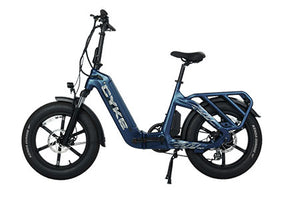
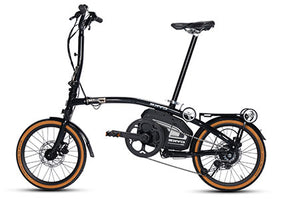
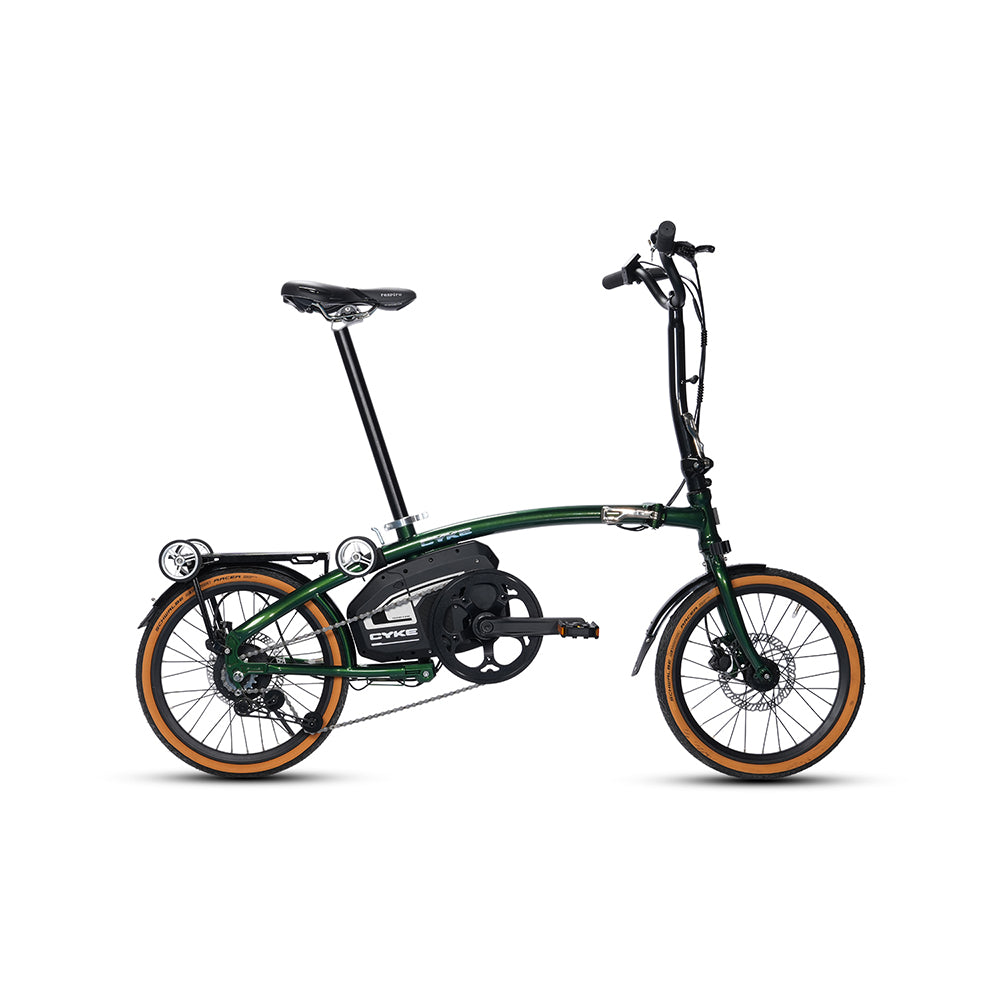
One example is the Kingfisher Mid-Drive Folding eBike from CYKE Bikes.
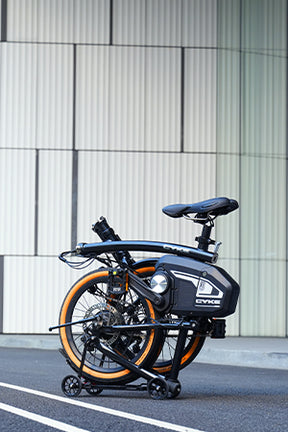
In fact, the Kingfisher has been called “the world’s most compact mid-drive folding ebike,” collapsing to just 28.74″×14.57″×27.56″. This means you can treat it as a compact commuter ebike. Its tri-fold design is genuinely easy to store under a desk, in a car trunk, or on public transit. It weighs 50 lbs, which is reasonable for a steel-framed mid-drive machine.
The Kingfisher is built around a 250W mid-drive motor (60 Nm of torque), enough to handle steep urban inclines with ease. It tops out at 20 MPH with three pedal-assist levels, giving riders real control over their output. And it runs on a 360Wh lithium-ion battery with LG cells, good for up to 55 miles per charge on the lowest assist setting.
Unlike cadence-sensor eBikes that just detect whether you're pedaling, this torque sensor folding ebike reads how hard you are pedaling and delivers assist proportionally. That creates a much more intuitive, natural ride, almost like riding a very strong traditional bike rather than a motorized one.
All of this comes with a sturdy Chromoly steel frame, puncture-resistant tires, and hydraulic brakes, so it feels like a premium folding ebike.
For a city commuting ebike that's going to be folded, unfolded, and ridden daily, that kind of resilience matters.
Riders who want the ride quality of a full-size mid-drive bike without giving up portability will find the Kingfisher very useful. If you're in the market for an urban commuting ebike that handles like a proper machine, not just a motorized folder, the Kingfisher deserves a serious look.
Final Thoughts
Mid-Drive Folding eBikes are rare because building one well is genuinely expensive and complicated. The space constraints, weight balance demands, and engineering costs all push manufacturers toward easier hub-motor solutions. Most brands take that easier road. And for a lot of riders, hub motors are perfectly fine.
But for riders who want real torque, smarter assist, and a ride that feels connected and natural, even in a compact, foldable package, the category is worth seeking out.
The CYKE Bikes Kingfisher is one of the few products that actually delivers on that promise. It's proof that a great foldable ebike is possible. It just takes the willingness to do the harder engineering work.
If portability is your priority but you're not willing to compromise on how your bike actually rides, that's the kind of eBike worth waiting for, or in this case, worth buying.


