










Featured in this posts
Ebike vs Gas Cost: Real Savings Calculator (2026)
Every mile you drive burns fuel you are paying for. Multiply that by five commuting days a week, plus errands, traffic delays, and rising fuel prices, and this quickly becomes one of the biggest monthly expenses.
So the question many riders are now asking is: Is there a smarter, more affordable way to get around?
Electric bikes are rapidly becoming a practical alternative to traditional car commuting. Lower operating costs, minimal maintenance, and zero fuel expenses make them an attractive option. But how much money do you actually save?
This article breaks down the real numbers side by side so you can make a clear, practical decision.
Ebike vs Gas: Which Is Cheaper?
For daily city travel, an e-bike is usually far cheaper than gas-powered alternatives like cars or motorcycles. The gap is big because a car has many costs at once: fuel, insurance, depreciation, registration, and repairs.
AAA’s 2025 study puts the average cost of owning and operating a new vehicle at $11,577 per year. The IRS sets 2026 business standard mileage rate at 72.5 cents per mile, which shows how expensive car travel still is.
By comparison, the U.S. Department of Energy says e-bikes can be a low-cost path to reduce energy use, with charging costs that can be less than $50 per year even for daily riding.
That is why many comparisons say e-bikes are dramatically cheaper, sometimes by as much as 95% per mile, compared with car travel.
Cost Breakdown: Ebike vs Car
To clearly understand ebike vs gas cost, it helps to compare a real car and a real e-bike side by side.
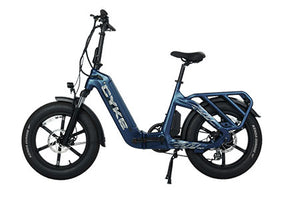
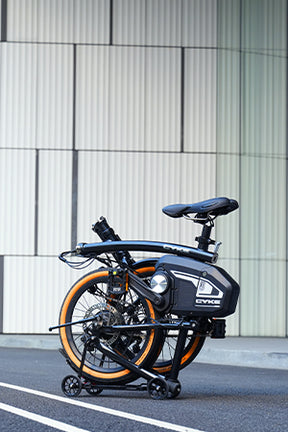
Here we are using a Toyota Camry sedan as the gas-powered vehicle and the Kingfisher mid-drive folding e-bike as the electric alternative.
The comparison assumes:
- 11,000 miles driven per year (about 30 miles per day)
- Gas price: $3.72 per gallon (AAA, March 2026)
- Electricity price: $0.172 per kWh (EIA, December 2025)
- Maintenance estimates: 10 cents/mile for a gas car and 6 cents/mile for EV (The U.S. Department of Energy)
- 2% annual inflation applied to operating costs
Purchase
The first difference appears before the ride even begins.
A Toyota Camry costs about $30,000. Even before fuel or maintenance, this is a major financial commitment. Insurance, registration, and depreciation also follow immediately after purchase.
The Kingfisher folding e-bike, on the other hand, costs about $1,999. The lower entry price means riders reach break-even much faster.
Fuel vs. Electricity
Gas prices fluctuate, but the national average sits around $3.72 per gallon in 2026. The Toyota Camry delivers about 44 miles per gallon. Driving 11,000 miles per year requires roughly 250 gallons of gasoline. That's roughly $930 per year spent just on fuel.
Ebike electricity cost is significantly lower. The Kingfisher uses a 360Wh battery, which equals 0.36 kWh of electricity per full charge. At the national electricity rate of $0.172 per kWh, a full charge costs about $0.06.
With an estimated 55-mile riding range, covering 11,000 miles annually requires about 200 charging cycles. The total yearly electricity expense comes to roughly $12.
Maintenance
At 11,000 miles per year, the Toyota Camry’s maintenance expense reaches approximately $1,100 annually. This includes oil changes, brake service, tire replacements, filters, and mechanical repairs that accumulate over time.
For the same yearly distance, the Kingfisher’s maintenance cost totals roughly $660 per year. Typical expenses include brake pads, tires, chain replacement, and occasional tune-ups. There are no oil changes, engine failures, or transmission repairs.
Cost Per Mile Explained
The cost per mile ebike vs car comparison tells the clearest story:
| Cost Category | Toyota Camry (Gas Car) | Kingfisher E-Bike |
| Energy Efficiency | ~44 MPG | ~55 miles per charge |
| Energy Cost | $3.72 per gallon | $0.06 per full charge |
| Energy Cost per Mile | $0.085 / mile | $0.001 / mile |
| Maintenance Cost per Mile | $0.10 / mile | $0.06 / mile |
| Total Cost per Mile | $0.185 / mile | $0.061 / mile |
| Annual Operating Cost (11,000 miles) | ~$2,035 | ~$671 |
Real Example: Daily Commute
This is where the commuting cost comparison becomes real:
Case 1: 5 miles/day (1,825 miles/year)
- Car: 1,825 miles × $0.185 = $338/year
- Ebike: 1,825 miles × $0.061 = $111/year
- Annual savings: ~$227
Case 2: 10 miles/day (3,650 miles/year)
- Car: 3,650 miles × $0.185 = $675/year
- Ebike: 3,650 miles × $0.061 = $223/year
- Annual savings: ~$452
How Much Can You Save Per Year?
Ebike savings per year depend on how often you ride, but the average urban commuter replacing a car for daily trips saves between $1,300+ annually. That comes from spending far less on fuel and maintenance during daily commuting.
Now add the purchase difference. Choosing a $2,000 e-bike instead of a $30,000 sedan means you avoid $28,000 in upfront vehicle costs.
Combine those two factors, and the financial impact becomes clear. You are not just cutting daily expenses; you are significantly lowering total transportation spending.
Of course, these are general estimates, and your actual savings will ultimately depend on your lifestyle, commute distance, driving habits, and daily transportation needs.
When an Ebike Might NOT Be Cheaper
To be fair, ebikes are not the best money saver in every case.
- Long commute: If you're traveling 30+ miles each way, range limits and riding time make an ebike impractical as your only transport.
- Weather: Harsh winters, heavy rain, or extreme heat reduce battery range and rider comfort. Cold temperatures alone can cut range by 20–30%.
- Cargo: Hauling large loads, multiple kids, or heavy groceries changes the equation. Cargo ebikes exist, but they cost more and have different trade-offs than a standard commuter setup.
Which Ebike Makes the Most Financial Sense?
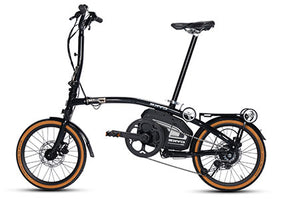
For Urban Commuting: CYKE Kingfisher
At $1,999, the Kingfisher Mid-Drive Folding eBike is built for daily commuters who want the best return on investment. Its 250W mid-drive motor delivers 60 Nm of torque with a top speed of 20 MPH.
The 360Wh battery offers up to 55 miles of range per charge, more than enough for a round-trip commute in most cities. It folds down to just 28.74 × 14.57 × 27.56 inches, so you can take it on a train or tuck it under a desk.
Its chromoly steel frame is built to last, and its low-maintenance profile keeps ongoing costs minimal. It is also TÜV Safety Certified and covered by a lifetime frame warranty plus a 2-year parts warranty. For pure ebike vs gas cost efficiency, the Kingfisher is a strong pick.
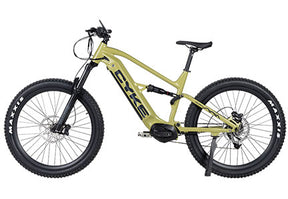
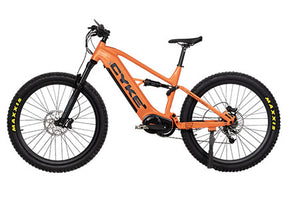
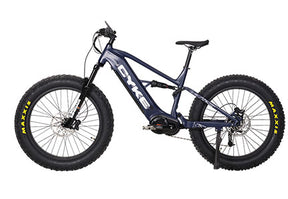
For Performance / Off-Road: CYKE Falcon S
The Falcon S Full Suspension eBike is priced at $3,399 and isn't primarily a cost-saving tool. It features a 1000W BAFANG mid-drive motor with 160 Nm of torque, a 960Wh battery, and RockShox full suspension.
It tops out at 28 MPH and handles off-road trails as confidently as city streets. Plus, the 29×3" MTB fat tires help you handle a wide range of road conditions with greater stability, traction, and less riding effort.
If your life involves a mix of trail riding on weekends and commuting on weekdays, the Falcon S earns its keep. The savings are still real, you are just also paying for a performance experience. Its real value is mixed use, not just low cost.
Wrapping Up
For city commuters, the financial case for an ebike vs gas cost is hard to argue with.
Of course, eBikes won't replace every car trip. But if your rides are short to medium length, e-bikes are one of the most cost-effective transportation decisions you can make in 2026.


