








Featured in this posts
How Much E-Bike Power Do You Actually Need?
You have done the research, read reviews, compared models, and watched videos. And yet, somehow, you still aren't sure which e-bike to buy. Not because the information isn't out there, but because none of it seems to answer the question you actually have: will this be powerful enough for my ride?
That confusion usually comes down to one number: 250W, 750W, 1000W. The specs are everywhere, but what do they mean for your daily commute, hilly neighbourhood, or weekend trail?
Here's the truth: there's no universally "best" wattage. The right e-bike power depends entirely on how and where you ride. A number that sounds impressive on paper may be total overkill for one person and barely enough for another.
This e-bike motor wattage guide will walk you through everything you need to know before making a decision.
Let's break it all down in plain terms.
What Does 250W, 750W, or 1000W Really Mean?
Motor power on an e-bike is measured in watts. The watt number tells you how much energy the motor can deliver to help you pedal.
Motor Wattage and Acceleration
Motor wattage directly affects how quickly the bike responds when you pedal or use the throttle.
A lower-power motor, such as 250W, provides gentle assistance. It supports your pedaling while still feeling like a standard bike. For many short trips around town, this level of e-bike power is enough. Most 250W motors stop assisting once the bike reaches around 15–20 mph.
With a 750W motor, the bike feels much stronger. Acceleration from a stop becomes quicker, and climbing hills feels easier. It gives riders more confidence on steep roads or rough paths.
At 1000W, the power increases even more. The bike accelerates very quickly and can handle steep hills with ease, even for heavier riders. But this extra power uses more battery, so the riding range may become shorter.
Power vs Real-World Riding Needs
Motor power plays a big role in how strong an e-bike feels. In simple terms, more watts usually mean more power and quicker acceleration.
So the real question becomes: how much e-bike power do I need for my type of riding?
A rider commuting on flat city streets doesn’t need 1000W of power. But someone riding through rough trails or carrying heavy gear may benefit from it. Your riding style and terrain help determine the right motor.
When riders compare 250W vs 750W e-bike motors, the biggest differences are climbing power and acceleration. When discussing 750W vs 1000W e-bike setups, the difference usually comes down to torque and off-road capability.
Is a 250W E-Bike Enough for Daily City Riding?
For most urban riders, a 250W e-bike is more than enough. This type of motor delivers smooth, efficient assistance that works beautifully in urban environments.
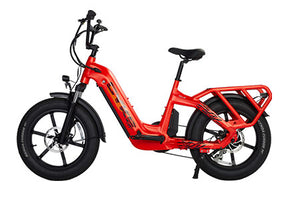
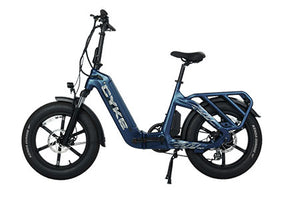
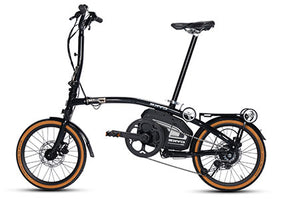
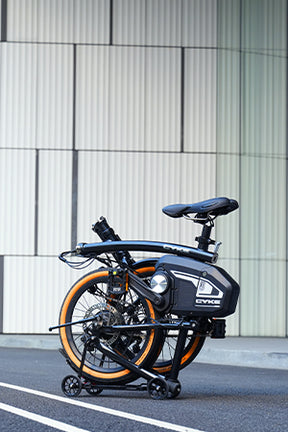
The best example is the CYKE Kingfisher, a compact mid-drive 250W e-bike designed for daily urban commuting.
The Kingfisher uses a 250W mid-drive motor that produces about 65Nm of torque and can reach speeds up to 20 mph. It also offers a range of up to 55 miles on a single charge.
The Kingfisher's mid-drive placement gives it a natural pedaling feel. When comparing mid-drive vs hub motor power, mid-drives often feel smoother. Power flows through the cranks rather than the wheel hub, so the bike responds to your effort in a more organic way.
The Kingfisher is also a great example of thoughtful folding e-bike motor power design, which prioritizes portability and control. The tri-fold frame folds down to just 28.9" × 14.6" × 27.6", making it easy to store or carry.
Another advantage is efficiency. Lower-wattage motors use less energy and extend battery range.
Because the power is moderate, the ride stays smooth and predictable. That makes 250W motors ideal for commuting, bike lanes, and relaxed city rides.
When Is a 750W E-Bike the Better Choice?
If your ride involves steep hills, loose dirt roads, muddy trails, or carrying heavy loads, a 750W e-bike is a better fit. Higher wattage gives you improved climbing ability and keeps performance consistent when conditions get tough.
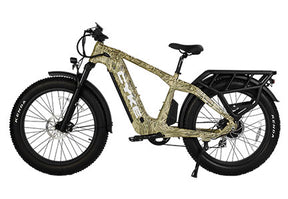
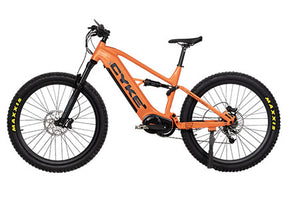
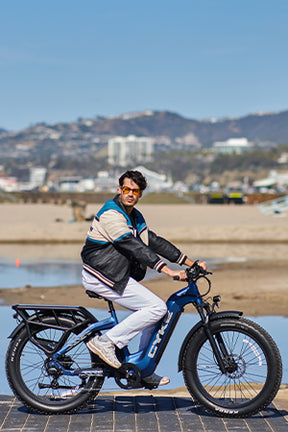
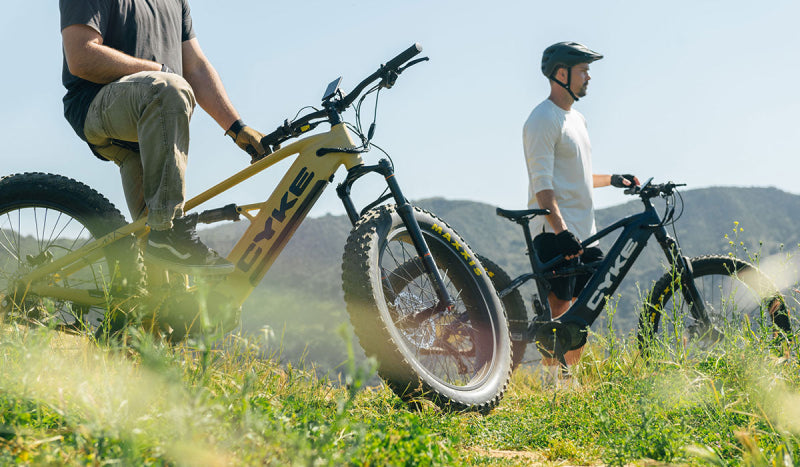
The CYKE Cheetah hunting e-bike is built for exactly this kind of riding. It's a powerful e-bike for hills and off-road terrain, powered by a BAFANG SUTTO 750W rear hub motor with 85 Nm of torque. This extra power helps riders maintain speed on rough ground.
It pairs that motor with 26" × 4.0" fat tires that absorb impacts, increase rolling resistance, and maintain traction on loose, uneven ground.
The Cheetah also includes a large 960Wh battery that can deliver up to 100 miles of range depending on riding conditions.
This type of hunting e-bike power is useful in several situations:
- Riding on dirt roads or uneven trails
- Carrying equipment
- Traveling long distances
- Climbing steep trails
For riders who want both power and practicality, this wattage often hits the sweet spot for the best e-bike motor power balance.
Who Really Needs a 1000W E-Bike?
When terrain gets truly demanding, steep rocky climbs, technical mountain trails, deep ruts, drop-offs, that's when 1000W e-bike power really proves its value.
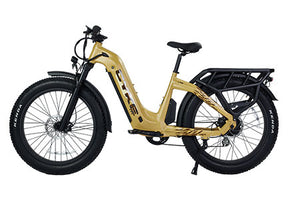
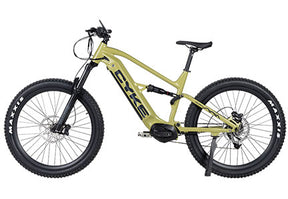
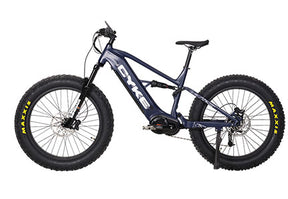
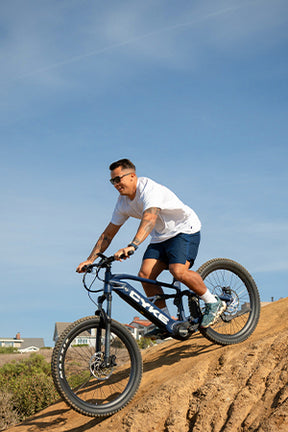
The CYKE Falcon S is a full suspension e-bike built for off-road riding. It runs a 1000W BAFANG mid-drive motor that can reach 1100W peak output and deliver up to 160Nm of torque, more than double what many standard motors produce.
On steep, technical terrain, that torque makes the difference between stopping halfway and riding through smoothly. This is what makes it a genuine high power electric bike rather than just a fast one.
The full suspension system with 150mm of travel in both the front and rear suspension, this e-bike helps absorb impacts when riding rocky or uneven trails.
Higher power allows the bike to maintain momentum over obstacles, steep climbs, and loose terrain.
Riders who benefit most from this level of power include:
- Mountain trail riders
- Off-road explorers
- Riders carrying heavy gear
- People riding steep terrain regularly
For everyday commuting, this much power may not be necessary. But for serious off-road riding, it makes a big difference.
250W vs 750W vs 1000W — Quick Comparison
| Power | Best For | Terrain | Rider Type |
| 250W | Commuting and city riding | Smooth flat roads, bike lanes, light inclines | Urban commuter, casual rider |
| 750W | Mixed terrain riding | Hills, gravel, dirt roads | Outdoor adventurer, heavier rider |
| 1000W | Aggressive off-road riding, mountain biking | Steep climbs, rough trails | Trail riders and off-road enthusiasts |
More Power Isn’t Always Better
Many people assume the biggest motor is always the best option.
But too much e-bike power can:
- Make the bike heavier
- Reduce battery efficiency
- Sometimes feel harder to control at low speeds
- Reduced legal compliance in regions where 250W or 750W limits apply
- A higher price tag
Lower-power bikes often provide smoother rides and longer battery life. They are also easier to manage in busy urban areas.
Conclusion
Choosing the right e-bike wattage is all about finding the motor that fits your real life, your commute, your trails, your terrain, your body, and your daily needs.
A 250W mid-drive like the CYKE Kingfisher works well for city commuting and everyday travel. A 750W motor like the one in the CYKE Cheetah provides stronger performance for hills and mixed terrain. And, a 1000W motor e-bike like the CYKE Falcon S is best for serious off-road riding and steep trails.
In the long run, the best e-bike is not the one with the biggest motor. It is the one that delivers the right balance of control, efficiency, and performance for the way you ride.


