







Featured in this posts
What Makes an E-Bike Feel Stable (and Why Some Don't)
Ever tried navigating a rough trail, dodging city potholes, or hopping a curb on a regular bike and felt the wheels slip or wobble?
That’s why choosing a stable e-bike matters more than most riders realize.
A stable eBike feels planted on the ground. It tracks straight, handles bumps smoothly, and responds calmly when you steer. But not every e-bike feels this way. Some bikes feel twitchy or unstable, especially at higher speeds or on uneven terrain.
Understanding what makes an e-bike stable helps you pick the right bike from the start, one that matches how and where you ride.
Let's break it all down.
Frame Geometry Plays a Big Role in Stability
Most riders never think about frame geometry. But it might be the single most important factor in e-bike stability. The shape and angles of the frame determine how a bike behaves under your body, especially when things get bumpy or fast.
Longer Wheelbases Improve Control
A longer wheelbase means there is more distance between the front and rear wheels. This simple change lowers the bike's tendency to tip or wobble. It resists sudden movements and remains stable when riding downhill or over uneven terrain.
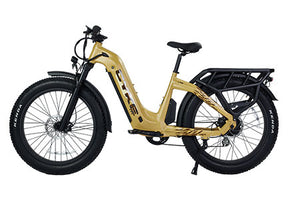
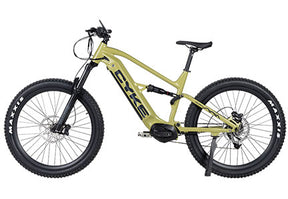
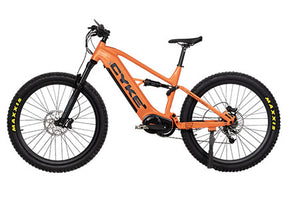
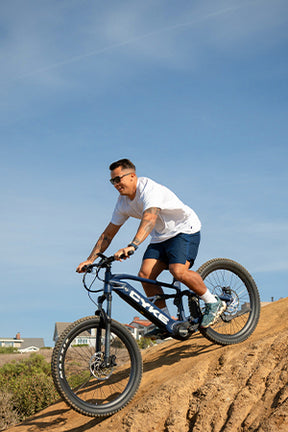
This is one reason the CYKE Falcon S stands out as a stable electric bike for trails designed with trail riding in mind. It features a long-travel aluminum alloy frame, available in both 17" and 19" sizes, paired with large 29x3" MTB tires that improve traction and stability on uneven surfaces.
This extended, longer frame layout and trail-focused design keep the bike planted when riding at higher speeds and predictable across all kinds of terrain.
Frame Angles Affect Steering Behavior
The head tube angle, at which the front fork meets the frame, shapes how quickly the bike responds when you steer.
- Slacker angles (leaning further back) slow down the steering response. This makes the bike feel more composed on rough or technical terrain.
- Steeper angles makes steering feel sharp and quick, which can be great for speed but less forgiving on uneven surfaces.
For trail and off-road riding, a slacker angle tends to win. It gives the rider more time to react and keeps the front wheel tracking forward instead of darting around.
Tire Width Has a Big Impact on Ride Stability
Tires are your only contact point with the ground. Their width and volume directly affect grip, comfort, and overall e-bike handling and control.
Wider Tires Increase Grip and Balance
Wider tires have more surface area touching the ground. That means better grip, especially on loose, wet, or uneven surfaces. They also hold more air volume, which acts as a natural shock absorber. The ride feels smoother, and the bike feels planted.
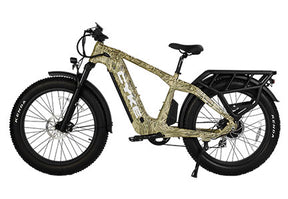
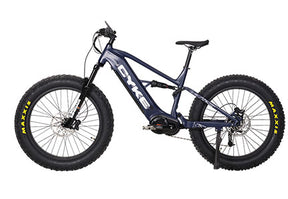
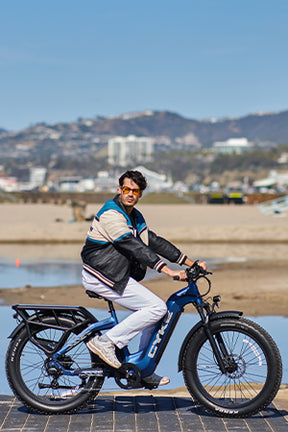
Fat tire e-bike stability is a well-known advantage in the e-bike world, and the Cheetah hunting e-bike is a clear example of why.
It runs on KENDA 26×4.0" fat tires. The 4-inch width gives it a wide, grippy contact with the ground that is perfect for:
- Hunting trails,
- Forest paths,
- Muddy tracks
- Rough terrain.
With a weight capacity of 450 lbs and a sturdy 6061 aluminum alloy frame, the Cheetah doesn't just look tough; it performs that way on the trail. Because fat tires run at lower pressure, they absorb bumps more easily and keep the bike tracking straight even on unpredictable ground.
Narrow Tires Feel Faster but Less Planted
Narrower tires reduce rolling resistance, which helps with speed on smooth roads. But they give up a lot in terms of grip and comfort.
On rough trails, they can feel less planted compared to wider tires. For city riders, this tradeoff can make sense. But anyone venturing off-road will quickly feel the difference.
Suspension Helps Keep the Bike Stable on Rough Terrain
Even if a bike has perfect geometry and wide tires, a stiff frame on a rough trail will still send shocks straight into your hands and body. Suspension changes that.
Front Suspension Reduces Impact From Obstacles
A front suspension fork absorbs hits from:
- Rocks
- Roots
- Curbs
- Trail ruts
When the bike hits one of these obstacles, the fork compresses and then releases. This movement keeps the front wheel in contact with the ground and helps your hands stay steady on the handlebars.
This control becomes even more important at higher speeds. When you hit a rock while riding fast, you want the bike to absorb the impact instead of bouncing off it.
Front suspension does exactly that, improving control on any uneven surface.
Full Suspension Improves Stability on Technical Trails
Full suspension e-bike stability takes things further by adding rear suspension as well. When both wheels can move independently over bumps, the entire bike stays more level and composed.
Traction also improves because the tires stay in contact with the ground longer, and so does rider confidence.
The Falcon S uses a RockShox front fork and a rear air shock with about 150 mm of travel. Together, they absorb small trail vibrations and bigger impacts. Paired with 29x3.0" Maxxis MTB fat tires on both wheels, this stable e-bike handles technical trails without forcing the rider to constantly fight the bike.
Weight Distribution Makes an E-Bike Feel Balanced
An e-bike carries a motor, battery, and all the usual bike components. How that weight is arranged across the frame matters more than most people realize.
A Balanced Center of Gravity Improves Control
When an e-bike’s weight is spread evenly, front to back and low to the ground, the bike feels natural to ride.
At low speeds, it's easier to balance because the weight isn't pulling in any unexpected direction. At higher speeds, the bike stays steadier in corners and tracks straight without constant adjustments.
Mid-drive motors help with this because they sit at the center of the bike near the bottom bracket, one of the lowest and most central points on the frame. That keeps the weight where it helps most, low and balanced.
Poor Weight Distribution Can Make a Bike Feel Unstable
When weight is shifted too far back or sits too high up, the bike can feel tail-heavy or top-heavy. For example:
- A tail-heavy bike tends to lift the front wheel under hard acceleration, which makes steering loose and unpredictable.
- A top-heavy bike feels like it wants to tip, especially at slow speeds.
Both situations make the rider work harder than they should just to stay in control.
Motor Power Can Also Affect Stability
Motor power is often linked to speed, but how that power is delivered also affects stability, especially for newer riders.
Gradual acceleration feels natural and easy to manage. Riders stay in control because the acceleration is predictable.
However, sudden bursts of power can catch riders off guard on loose or sloped terrain, causing the front wheel to lift or the rear wheel to spin out. For beginners in particular, this kind of unpredictability can feel dangerous.
The best e-bikes combine power with control. When the motor responds naturally to pedaling, it contributes to a more stable e-bike riding experience.
Why Some E-Bikes Feel Unstable
Now that you know what creates stability, here are some common causes why some e-bikes feel unstable:
- A short wheelbase puts the wheels close together, which reduces the bike's natural balance and makes it react too quickly to bumps.
- Narrow tires reduce grip, especially on rough or uneven ground.
- Poor weight distribution, especially when the battery sits high on a rear rack, raises the center of gravity and makes the bike feel top-heavy.
- Aggressive steering geometry with a steep head tube angle makes the front wheel turn very quickly, which can feel twitchy on uneven terrain.
- A stiff frame with no suspension transfers every road imperfection straight to the rider, making control harder on rough surfaces.
Conclusion
Frame geometry, tire width, suspension, weight balance, and motor behavior all affect how stable an e-bike feels. Each part plays a role. When they work well together, the ride feels solid, predictable, and easy to control.
Bikes like the CYKE Cheetah and Falcon S show what happens when these choices are made with the rider in mind. When you know what to look for, you won’t end up with a bike that feels like it's working against you.


